What is a digital twin? A guide for places, not factories
Most explanations of what a digital twin is start in a factory. Ours start with parks, coastlines and new districts that do not exist yet. Here is what a twin is for a place, how it differs from a 3D model, and where they quietly go wrong.
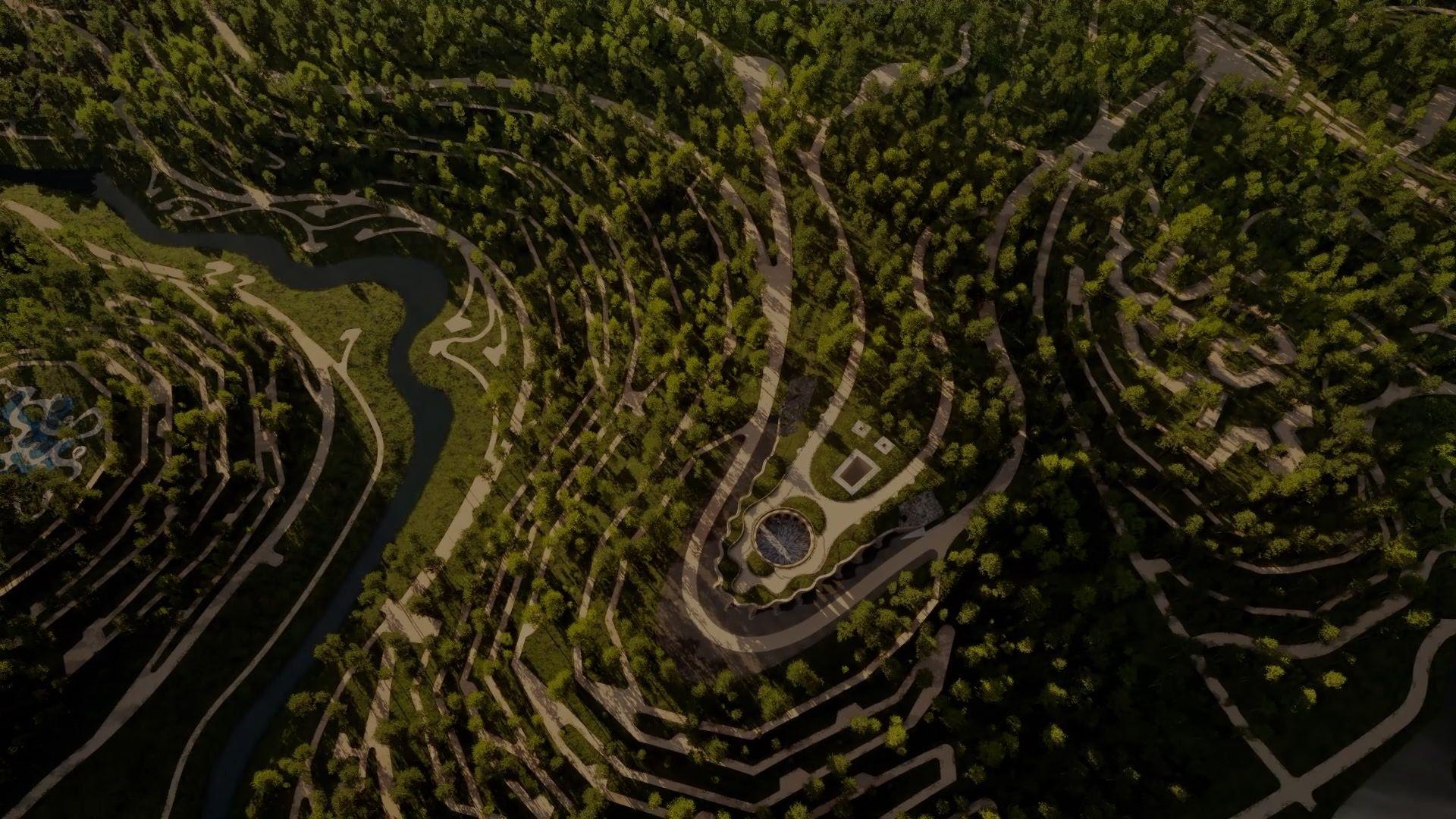
A digital twin is a live digital model of a real place that stays in step with the plan, and that more than one team uses to make decisions. That last part is the bit most definitions leave out. If only the visualisation team ever opens it, you have a very expensive render.
Search for what a digital twin is and you will mostly find jet engines, production lines and sensors on wind turbines. That is where the term grew up, and it is a useful world. But the twins we build are of destinations, parks and coastlines, often years before anyone can walk around them. The questions are different, and so are the mistakes.
What a digital twin is when the subject is a place
For a place, the twin is the master plan made navigable. Every district, building, path, planting zone and transport link sits in one model, organised in layers you can switch on and off. It runs in a real-time engine, so you can fly through it, stand in it at eye level, change the time of day or ask what sits behind a particular plot.
For a development, the important thing is that it is not frozen. The plan changes every few weeks while a giga-project is being designed, and the twin changes with it. Whoever opens it next month sees the scheme as it stands next month, not as it stood when the marketing film was cut.
How it differs from a 3D model or a render
A render is a picture of a decision. Someone chose the angle, the light and what to leave out, and then it was finished. A 3D model is closer, but it usually belongs to one team and lives in one piece of software. Hand it to the sales team and they cannot open it. Hand it to the web team and it is far too heavy.
A twin is built to be used by everyone, on whatever screen they have. In practice that means three things the other two lack. It is hosted somewhere central rather than on one artist's workstation. It is versioned, so you know which design was approved and when. And it can be published out to different surfaces, from a sales suite table to a phone, without someone rebuilding it each time.
One twin, many jobs
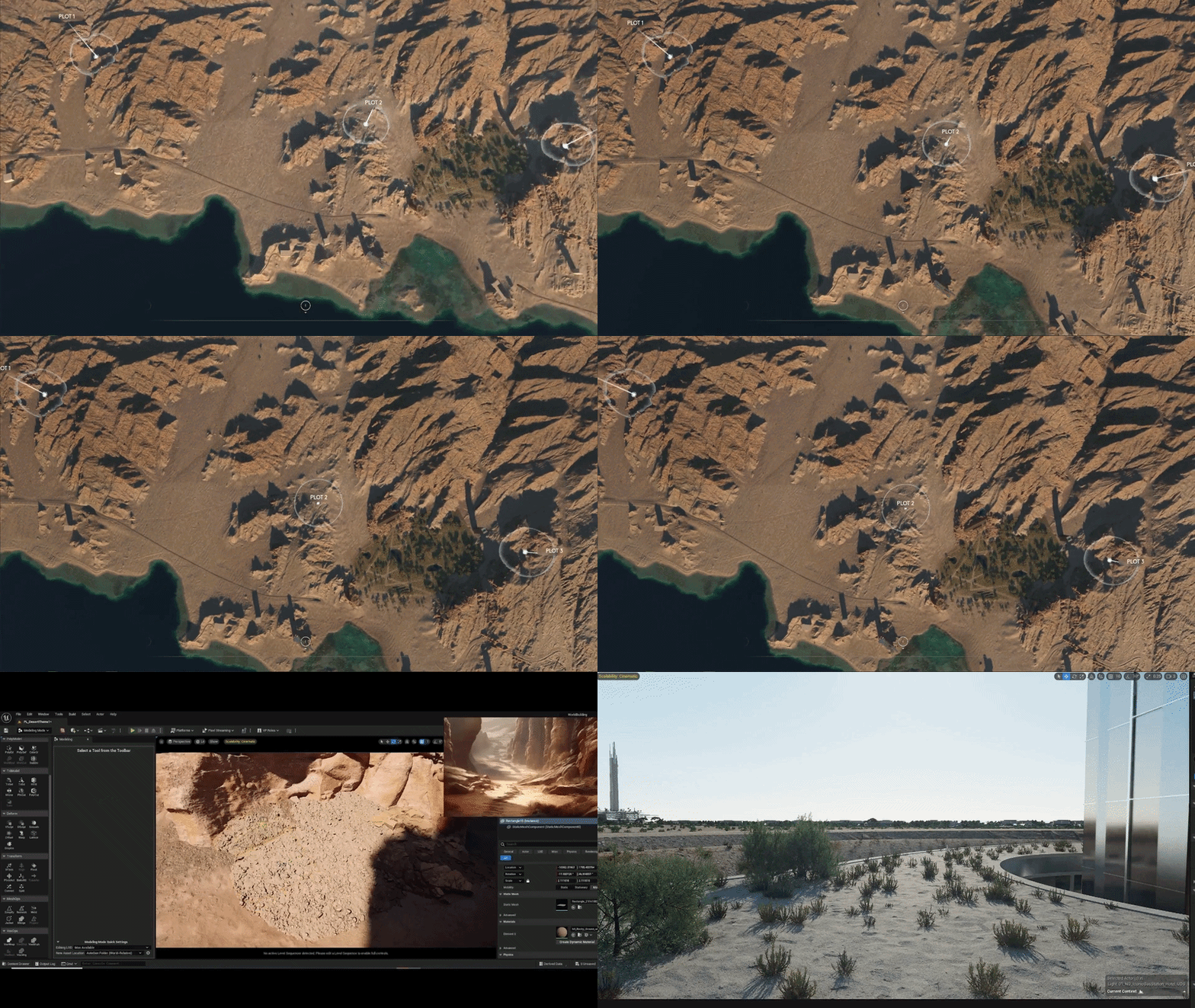
The clearest example from our own work is MAGNA, the coastal region of NEOM with twelve destinations planned along 120 kilometres of the Gulf of Aqaba. The twin itself already existed and was very good. Our job as lead agency was to make it useful to the whole department, so we treated it the way a software company treats its code. It was hosted on our platform, wired into a build pipeline and released wherever it was needed.
Leadership signed off designs inside the twin at full fidelity. Sales teams presented from pixel-streamed apps running the same model in a browser, with no installs. The public saw it on the web, and customers could place it around them in AR. By the end, more than twenty applications and systems drew on that one asset, including the dull but necessary ones: asset tracking, content libraries and pipelines that pulled out stills and films on demand.
The point is not the number. It is that the design leadership approved was the same design a buyer explored, with no redrawn renders in between. If you work in development sales, you will know how rare that is.
Digital twins in real estate and smart cities
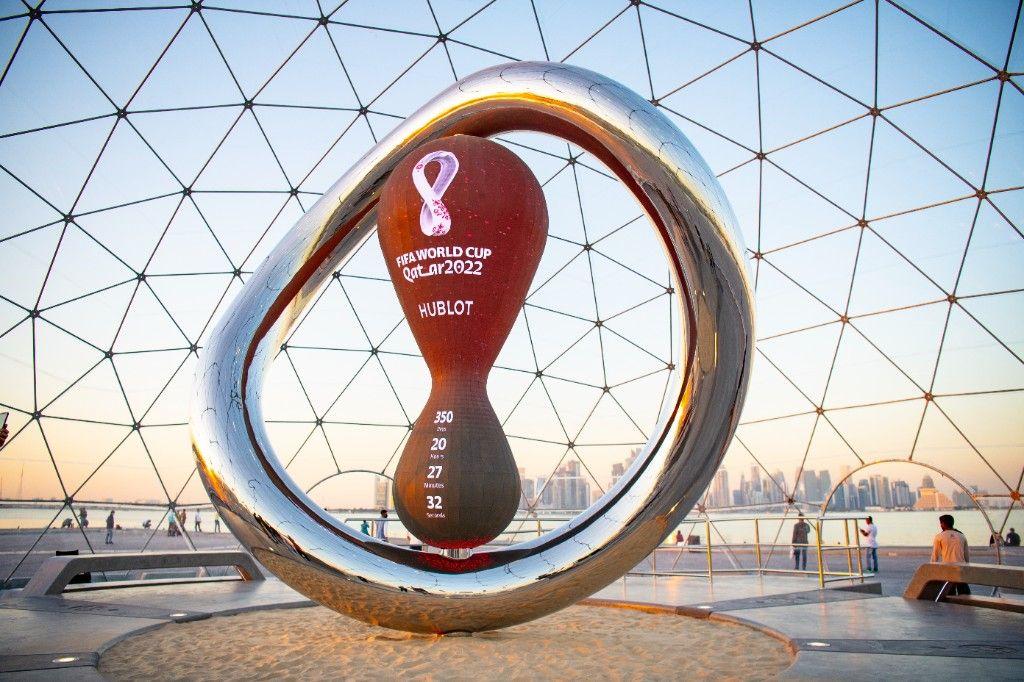
For King Salman Park in Riyadh, set to be the world's largest urban park at more than 16 square kilometres, the twin was a way to make that scale feel real to investors. We built one model of the whole master plan and drove three things from it at once: a physical model table lit from beneath so a selected district glows, a tablet app with an AR layer over the table, and a large LED wall behind. It debuted at MIPIM 2026 in Cannes, in front of 20,000 delegates from 90 countries, and was designed to tour before settling into a permanent visitor centre. Updates to the plan are pushed to the kit wherever it is.
At city scale, the best known public example is Virtual Singapore, launched at the end of 2014 under the National Research Foundation with the Singapore Land Authority and later GovTech. Planners have used it to model solar panels on an older housing estate in Yuhua and show residents how much energy they would capture, and to try out bike rack locations with the people who would use them. It is a good reminder that a smart city twin earns its keep in ordinary planning conversations, not in a launch video.
A twin of something that already exists
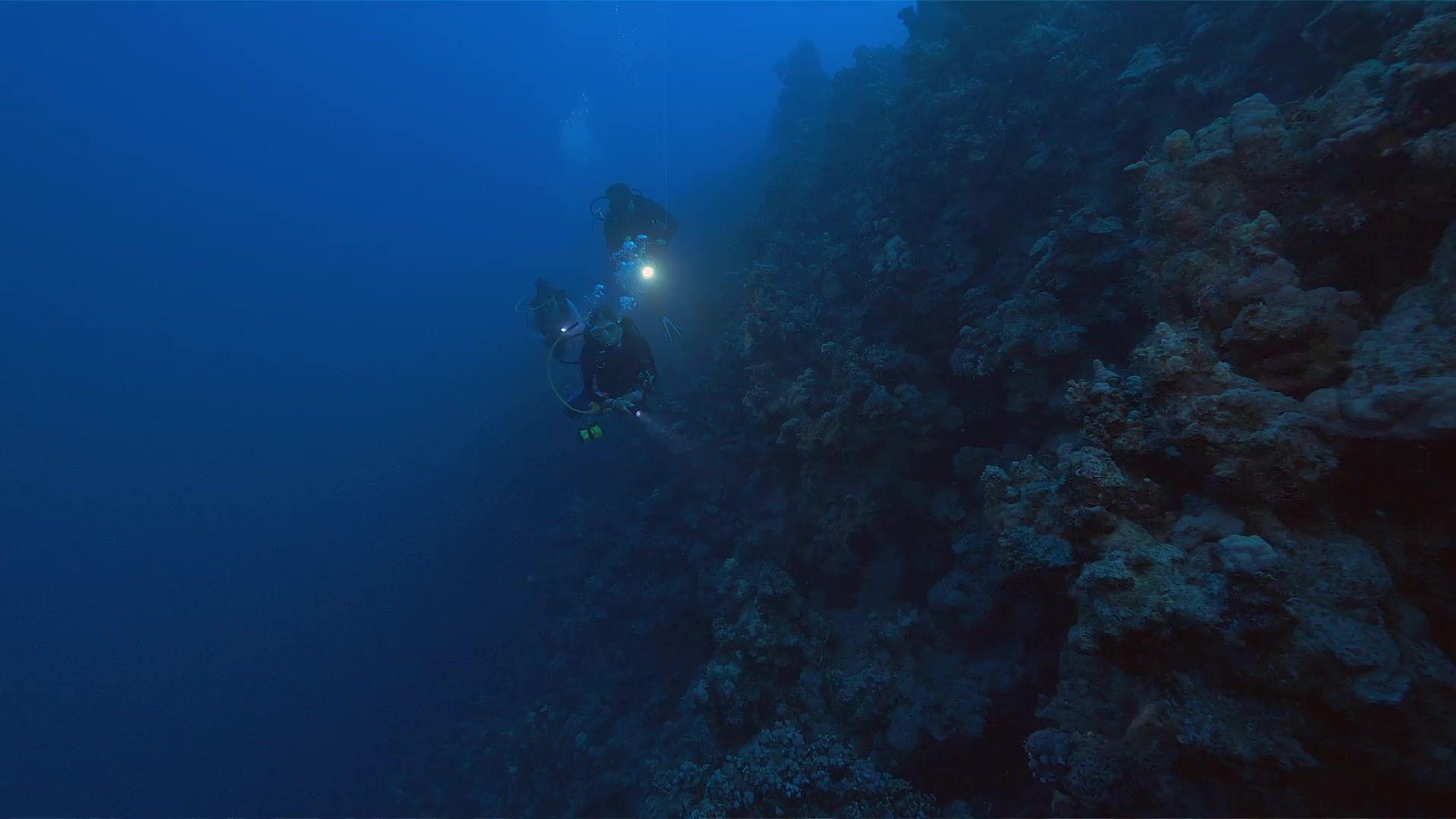
Not every twin is of a future place. At Yuba Island in the Red Sea, working for NEOM with the dive and marine science team at BDML, we turned six months of underwater survey into a twin of 437 hectares of reef at one millimetre per pixel. More than a hundred species swim through it, each with its own behaviour.
Visitors explore it in a CAVE, a room where the reef is projected around them at true scale, inside NEOM Sport. Researchers use a desktop version of the same twin to measure coral growth. One survey, two very different audiences, and neither had to compromise for the other.
Where digital twins go wrong
The most common failure is the twin that is built once and abandoned. It is commissioned for a launch, looks wonderful at the event, and is never updated. Six months later the master plan has moved on, the twin is wrong, and people quietly go back to PDFs. A twin that is out of date is worse than none, because someone will eventually show it to an investor.
The second is that nobody owns it. Design thinks marketing owns it, marketing thinks the consultant does, and the consultant's contract ended. Every twin needs a named owner inside the client organisation, a budget line for keeping it current and a clear route for plan changes to reach it.
The third is the wrong level of detail. Some twins are modelled down to door handles and run at four frames a second on anything short of a gaming PC. Others are so simplified that the design team will not trust them. The Virtual Singapore team have spoken openly about this trade-off, noting that every extra layer of detail makes the model more costly and harder to maintain. Decide early what decisions the twin must support, and model to that.
There is also an honest question about whether you need one. For a single building with one sales suite and a short sales period, good renders and a film may be enough. Twins pay back when the place is large, the plan keeps changing and several teams need to show it to different people over years.
If you are thinking about one
Start with a list of who needs to see the place and what each of them needs to decide. That list tells you the level of detail, the surfaces and how often it must update. Then agree who owns it after launch, before anyone opens a modelling tool. There is more on how we approach this on our digital twins page.
If you have a twin that is gathering dust, or a master plan that deserves one, we are always glad to talk it through.