Six brand activations people actually travelled for
Most brand activations are forgotten by the time the stand comes down. The ones people cross a city for tend to share a few habits. Here are six we keep coming back to, three of them our own, and what each one got right.
A brand activation has one job: get someone to give you their time when they had no plan to. That sounds simple. In practice most activations ask for the time and give nothing back, which is why so many of them are a branded backdrop, a QR code and a bowl of mints.
We have built a fair few of these over the last decade and queued for plenty more. The six below are not a ranking. Each one is here because it teaches one thing we think is worth stealing.
First, what counts as a brand activation?
For us it is a live moment where people do something with a brand rather than watch it. A pop-up, a stand at a trade show, a takeover of a street or a building. The test is whether the audience acts. If the best someone can do is look at it, you have made an advert with a floor.
1. Airbnb and Barbie: the Malibu DreamHouse
In July 2023, timed to the release of the Barbie film, Airbnb listed Barbie's Malibu DreamHouse with Ken as the host. There were two one-night stays, on 21 and 22 July, each for up to two guests, and they were free. Guests paid their own way to Malibu.
So, at most four people stayed in the house. Everyone else experienced it as a listing, a set of photos and a news story. That is the clever part. The activation was not really the building. It was the idea that you could book it, and the scarcity did the rest.
What to take from it: a tiny physical footprint can carry a huge audience if the mechanic is one people already understand. Everyone knows how an Airbnb listing works.
2. The Mauritanian: 12,000 posters you could un-redact
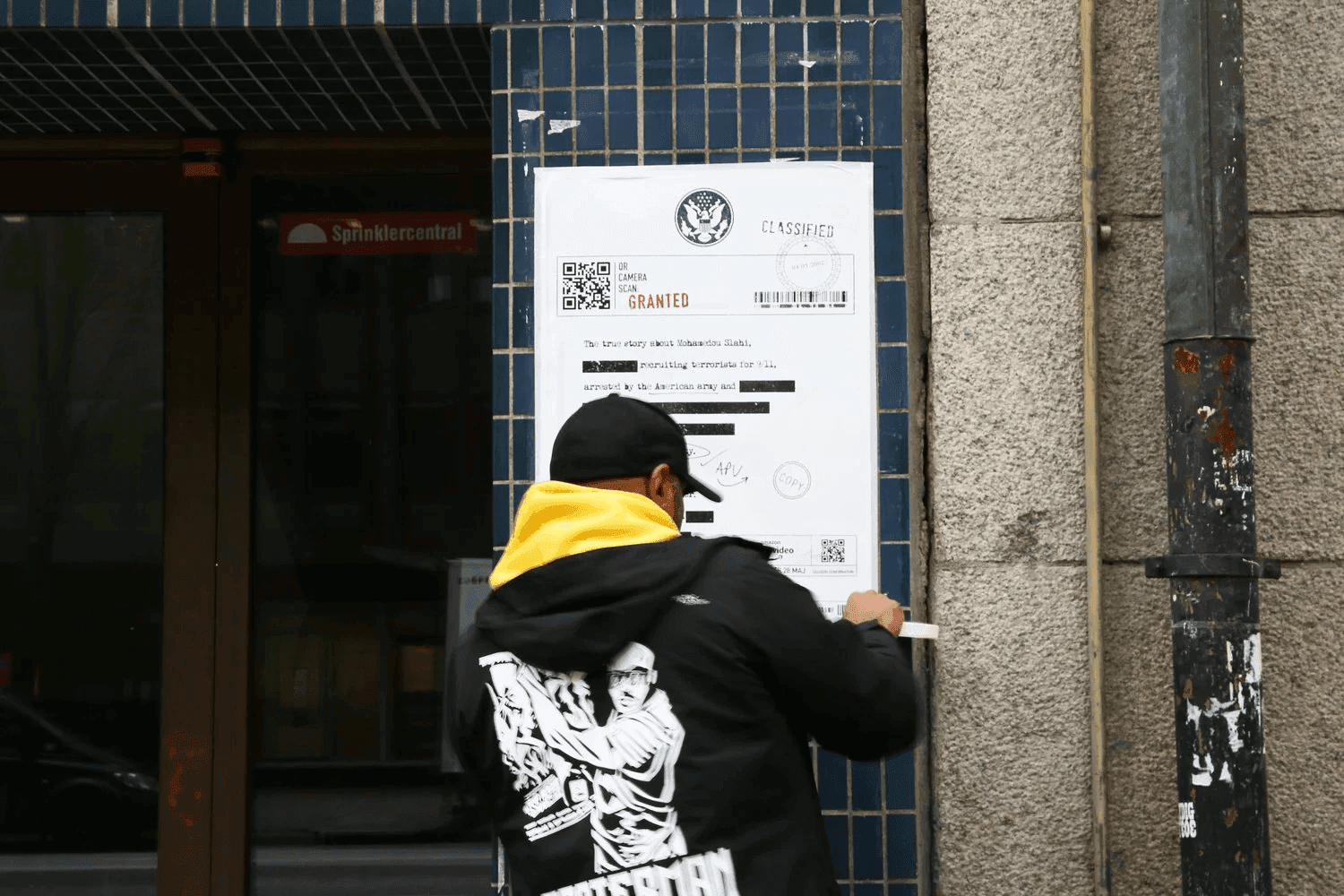
This one is ours. For the launch of The Mauritanian on Amazon Prime Video, a true story about classified documents, we turned 12,000 posters into live gateways. Scan the code with your phone camera and the blacked-out text lifted off the page in augmented reality. There was no app to download, which matters more than any other decision we made.
The campaign ran to 135,000 sessions across those 12,000 sites. We printed the posters and built the AR layer in the same team, so every poster behaved the same way. When the print and the digital sit with different suppliers, someone ends up debugging a QR code on a wet street at 7am.
What to take from it: remove the download. Every extra step loses people, and an app store is a very big extra step.
3. The FIFA World Cup countdown clock, Doha
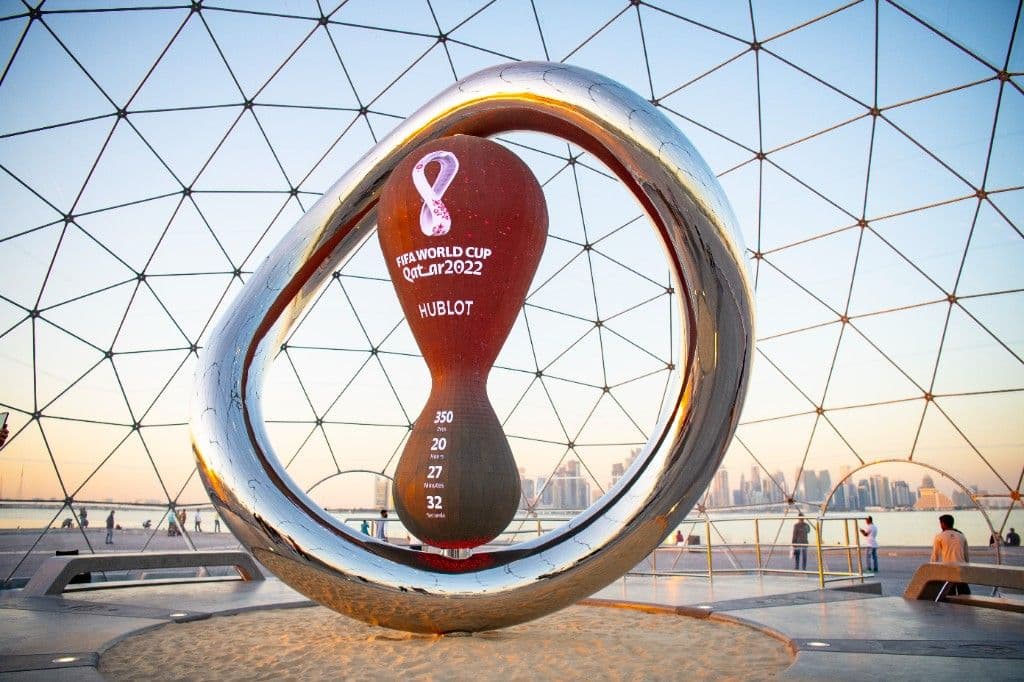
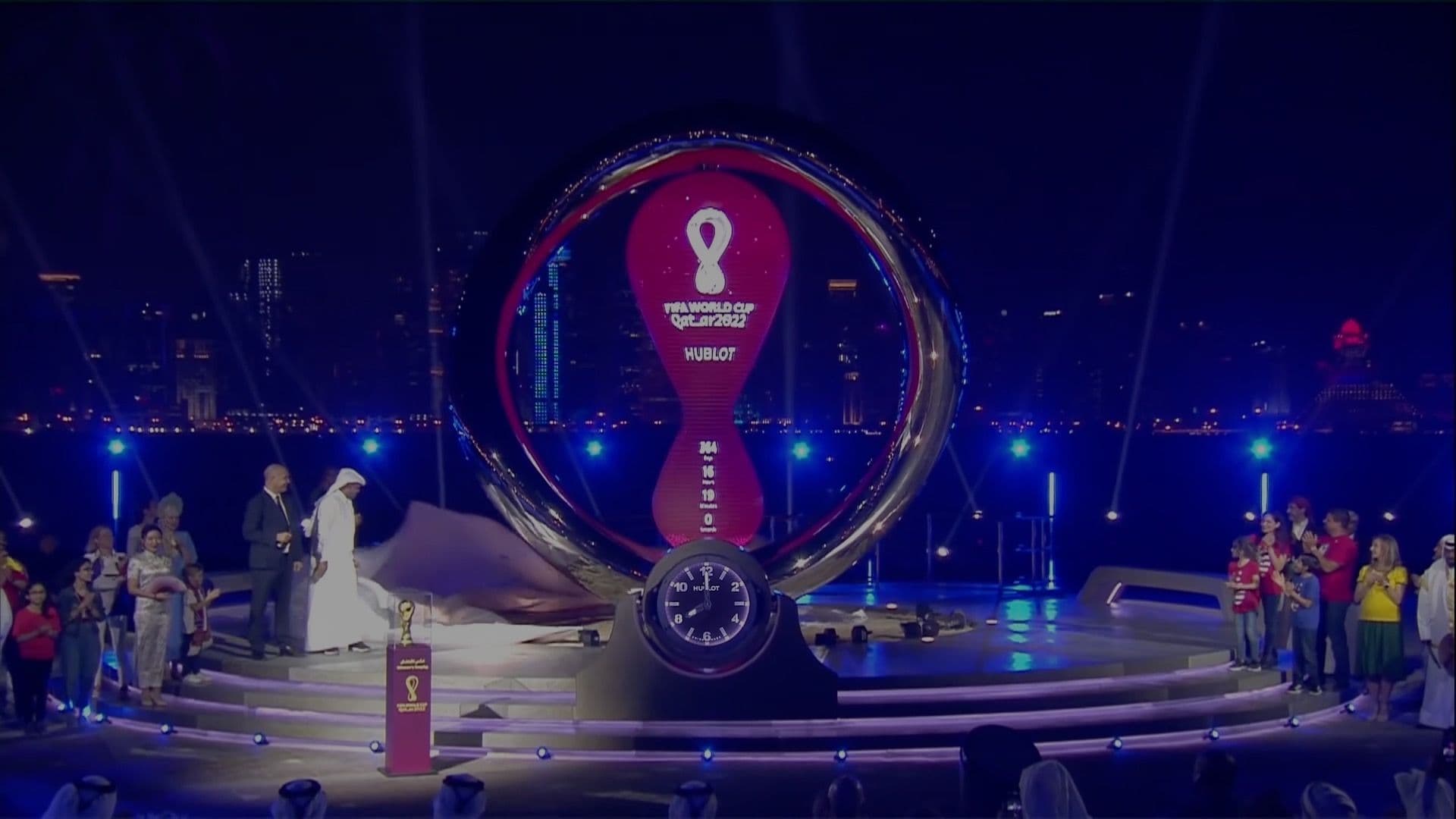
Also ours. The official countdown clock for FIFA 2022 stood on Doha's Corniche for a full year. Behind the sculpture ran a real-time engine, built in Unreal, simulating sand falling through time on the screen every second of the day and night. It was broadcast globally, visited by more than a million fans, and generated over a billion social moments.
A static clock would have been photographed once. Because ours changed every second, and looked different at dusk than at noon, people came back and filmed it again. It also never went down, which on a live global broadcast is the thing nobody thanks you for and everybody notices if you get it wrong.
What to take from it: give the activation a reason to look different tomorrow. Repeat visits are where the social reach comes from.
4. Stranger Things: The Experience
Netflix and Fever opened Stranger Things: The Experience in New York in 2022 and then took it on tour, London included. Visitors walk through Hawkins Lab and into the show's world, in a ticketed experience that lasts about an hour, with a themed bar and shop at the end.
Two things stand out. Fans are not watching the story, they are cast in it. And people paid for tickets, so the activation funded itself rather than sitting on a marketing budget. Most brands never get to that point because they assume nobody would pay. For a strong enough property, people will.
What to take from it: if the world you have built is good enough, charge for entry. A paying audience is a much clearer measure of success than footfall.
5. TONOMUS at LEAP and MWC: a show on the hour
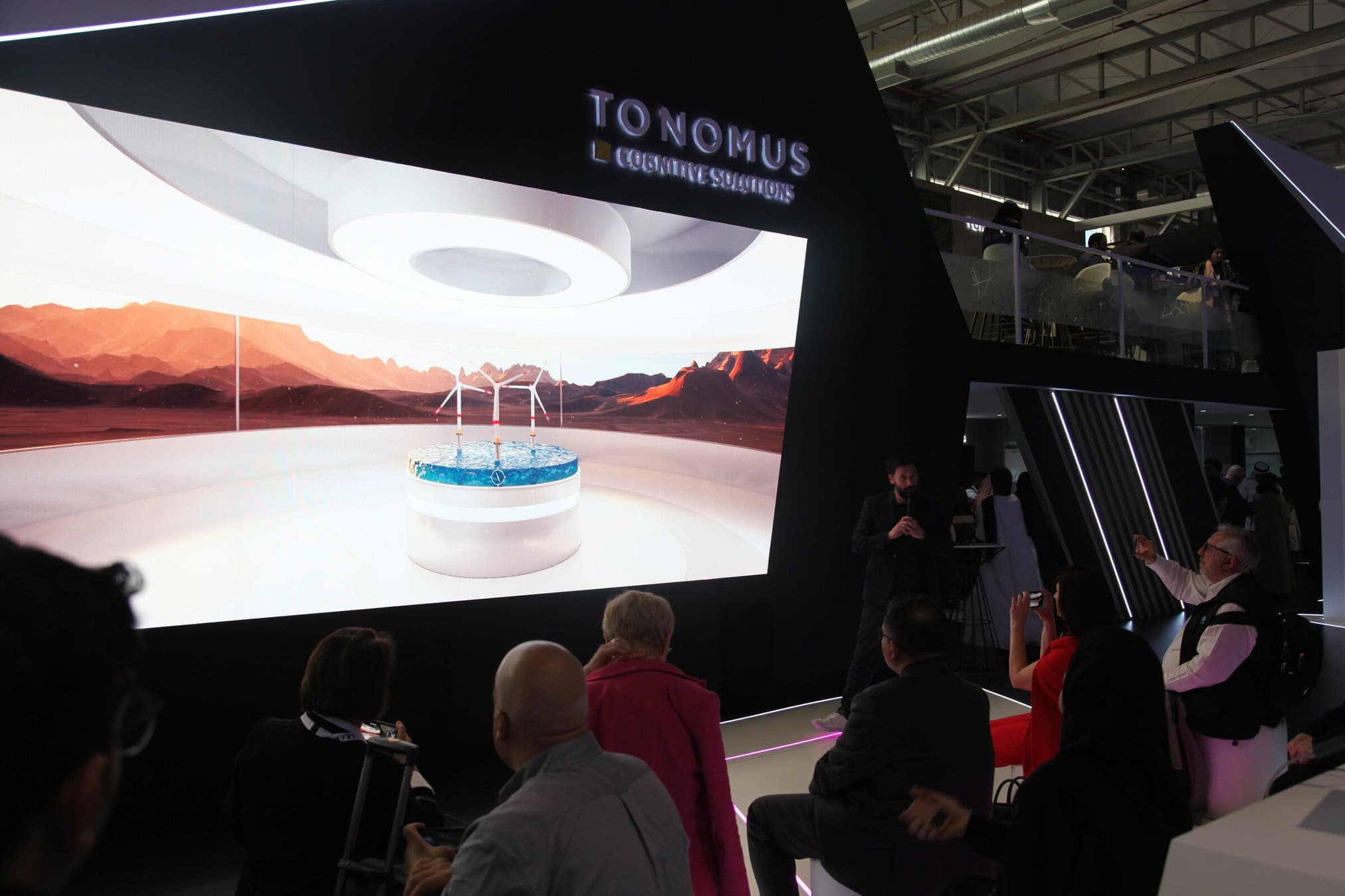
Our third. Every stand at a tech event plays a film on a loop. For TONOMUS, NEOM's technology company, we built a live broadcast instead, performed on the hour, every hour, taking visitors into real-time virtual worlds. Around 100,000 people went through it. Eighteen days after LEAP in Riyadh we packed the whole rig up and did it again at MWC in Barcelona.
The schedule turned out to be the thing. On a trade show floor, "the next show starts at three" is a stronger call to action than any screen. People planned their day around it, brought colleagues back and stood three deep.
What to take from it: a timetable creates a crowd. Give people a time to turn up.
6. Nike House of Innovation
Nike's House of Innovation stores, starting with the Fifth Avenue flagship in New York in 2018, treat retail as a permanent activation. Product customisation, app-linked services and floors that change with launches mean the store is something to visit, not just somewhere to buy trainers.
It is on this list because it shows where activations are heading. The pop-up that disappears after a weekend is being replaced by places that keep running. We wrote more about that shift in The Experience Advantage.
What to take from it: an activation does not have to end. The best ones become part of the city.
What the six have in common
None of them depends on the newest technology. AR, real-time engines and LED have been around for years. What they share is a mechanic people understand within seconds, whether that is booking a house, scanning a poster or turning up at three o'clock.
Each one also gives people something to film. That is not vanity. For most activations, the people standing in front of it are a small share of the real audience, and the rest arrive through their phones.
And each was built to run without drama. A broken activation is worse than no activation, because the people who came will tell everyone about it.
If you are planning one
Start with the place and the people who will be in it, not the technology. Decide what someone does in their first ten seconds, because that is all the time you will get. Plan the moment people will film. Then work out how you will know it worked, ideally with something better than a footfall counter.
An installation can be live in around eight weeks if the brief is clear. If you are weighing up an activation for a launch, a trade show or a destination, we are happy to talk it through.