Experiential retail: why people now travel to some shops
Some stores have become places people plan a trip around. Experiential retail works when a shop borrows the habits of an attraction, and fails when it only borrows the props. Here is where we think the difference lies.
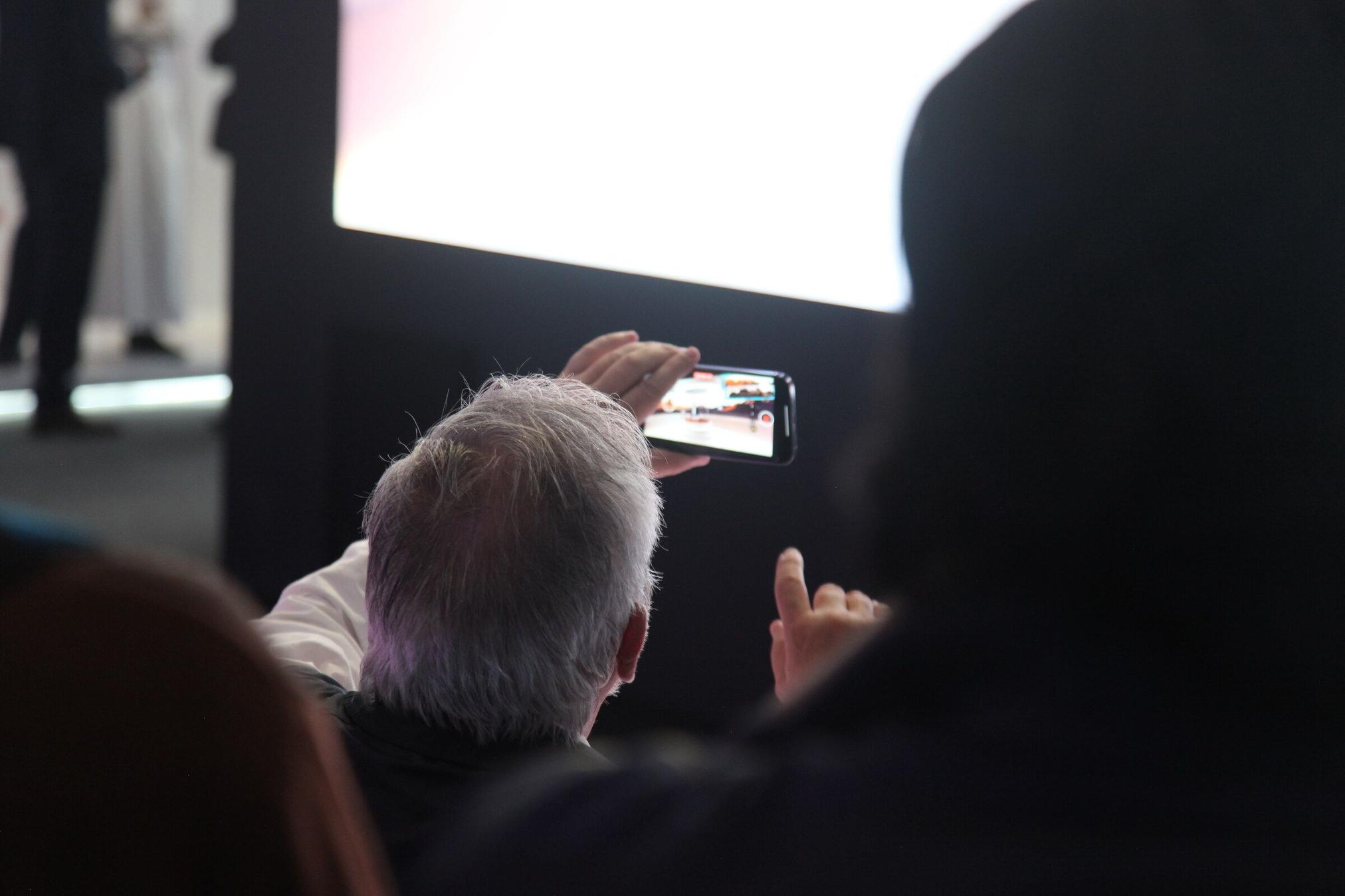
There are shops in London, New York and Seoul that people put on a travel itinerary next to the museums. They queue outside, film the inside and leave having spent nothing, or a great deal. That is experiential retail at its best, and it is worth understanding why it works, because most attempts to copy it do not.
We are a studio that builds attractions and brand experiences, not shops. But the questions retailers are now asking are ones we deal with every week at destinations: how do you get someone through the door, what do they do in the first minute, and why would they ever come back?
From transaction to visit
For most of its history a shop was somewhere you went because you needed something. Online shopping took a lot of that job away. What is left for a physical store is what a website cannot do: let you handle the thing, meet the people who know about it, and spend an hour somewhere that feels different from your own street.
That changes what a store is for. It becomes closer to a visit than a transaction, and visits are judged differently. Dwell time and return visits start to matter alongside sales per square foot. A few brands have rearranged their whole business around that idea, and they are worth studying.
Three stores that behave like attractions
Gentle Monster, the Korean eyewear brand, is the clearest case. Its first standalone European store opened on Argyll Street in London in 2018, built around a story about aliens who visited Earth, learned kung fu and took it home. The shop floor had kinetic installations, a ceremonial gong and a robot battle arena. Creative Review described robots springing to life every three minutes at the sound of the gong. The sunglasses were almost secondary.
That is deliberate. In 2021 WWD reported that the company employed almost ten times as many spatial designers as product designers. In September 2025 its parent company, IICOMBINED, opened Haus Nowhere in Seoul, a three-storey building that houses all its brands alongside art installations, a teahouse and the company's headquarters. For Gentle Monster, the store is the marketing.
The LEGO flagship at 636 Fifth Avenue in New York, which opened in June 2021, took a different route. LEGO called it a "retailtainment" concept. The centrepiece, the Tree of Discovery, is built from more than 880,000 bricks. The Brick Lab is a bookable 20-minute session where children build something, scan it and watch it appear in an animated room, and at launch it cost $15 for a child and an adult. The Mosaic Maker turns a photo of your face into a LEGO portrait you take home.
What LEGO got right is that almost every experience in the store ends in a product. You build, you scan, you buy. The fun and the till sit on the same route.
Samsung 837, in New York's Meatpacking District, is the useful counterpoint. When it opened in February 2016 it covered 55,000 square feet, with a three-storey wall of 96 screens, a virtual reality experience, a gallery and a café. It did not sell products. Its general manager told Chain Store Age the aim was "the future of retail. Which is not retail, but experience." In February 2023 Samsung reopened it as a space where visitors could "see, try and buy". We do not know the internal reasons, but the direction of travel is worth noticing.
What retailers can borrow from attractions
Give people a reason to come back. An attraction that never changes gets one visit per person. The stores that draw repeat crowds treat the space like a programme: a new installation each season, a build that changes with a launch, an event that turns the shop into somewhere else for a weekend.
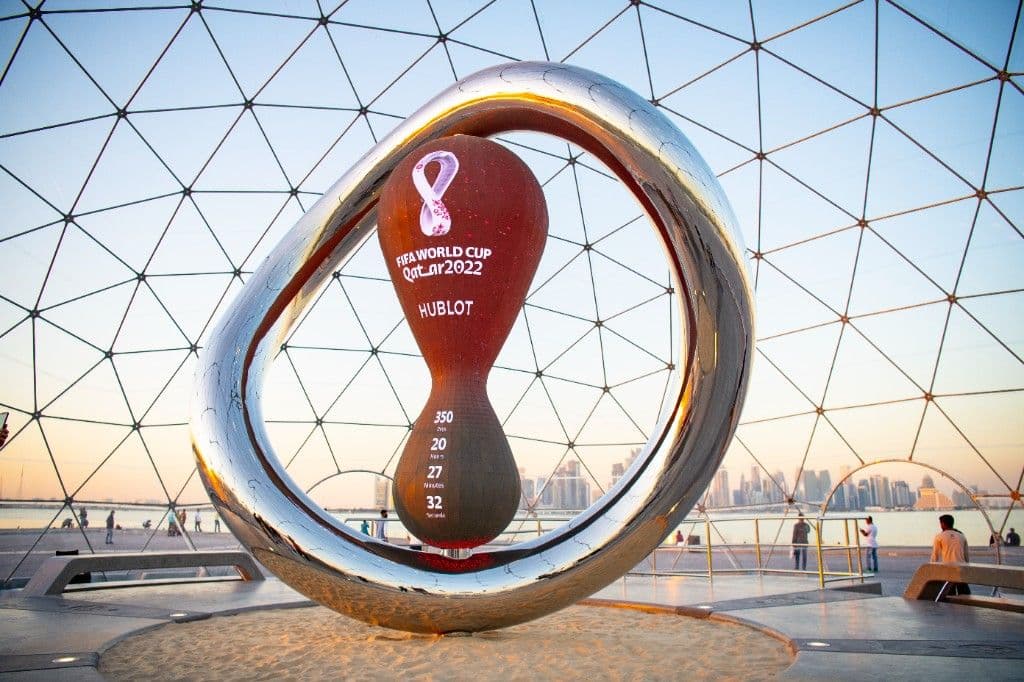
Our FIFA countdown clock in Doha ran on a real-time simulation of falling sand for a full year and drew more than a million visitors. It never looked the same twice, and it looked completely different at dusk than at noon. People came back to film it again. A static sculpture would have been photographed once.
Put things on a schedule. A timetable gives a crowd a reason to gather, and Gentle Monster's gong does this in miniature. When we ran live shows for TONOMUS at LEAP in Riyadh and MWC in Barcelona, on the hour, every hour, the timetable did more work than any screen on the stand. People planned their day around it and brought colleagues back.
Staff as hosts, and content people film
In an attraction the people on the floor are hosts. They set the mood, explain what to do and spot the visitor who looks lost. In most shops, staff are there to restock and take payment, and they are measured on exactly that. If you want a store to feel like a visit, you have to train and reward people for hosting, which is a bigger change than any fit-out.
Then plan the moment people will film. For a store like this, the people inside are a small share of the real audience, and the rest arrive through someone's phone. That moment needs good light, a clear backdrop and room to step back. It also needs to say something about the brand, or you have paid for a selfie wall that advertises nothing.
Where experiential retail goes wrong
The most common failure is the gimmick with no link to the product. A slide, a ball pit, a mirrored room. People film it once and never think about the brand again. A simple test: if you could swap your logo for a competitor's and the experience would still make sense, it is decoration.
The second is technology that breaks. Retail is hard on hardware. Screens run twelve hours a day, touchscreens get greasy, and the one person who knows how to restart the media server works at head office. An interactive wall showing an error message is worse than a blank wall, because it tells every visitor the brand cannot keep its own promises. The FIFA clock kept 100% uptime for a year, and that came from planning for failure from the first week rather than hoping it would not happen.
The third is the cost of change. Installations are expensive to refresh, and something exciting in March is wallpaper by September. If there is no budget or plan for the next one, the store slowly turns back into a shop with odd furniture. Be honest at the start about how often you can afford to change things.
And some products simply do not need it. If people buy from you on price and convenience, a destination store may be the wrong investment. Good service and a well-run shop might do more for you than a robot.
Where to start
Start with the visit, not the fit-out. What does someone do in their first ten seconds inside? What will they film? What brings them back in three months? And what is the route from the fun to the product? If you cannot answer those, more screens will not help.
Our brands work covers projects from 12,000 augmented reality posters for The Mauritanian to live shows on trade show floors, and we wrote about the wider shift in The Experience Advantage. If you are thinking about turning a store into somewhere people visit, we are happy to talk it through.